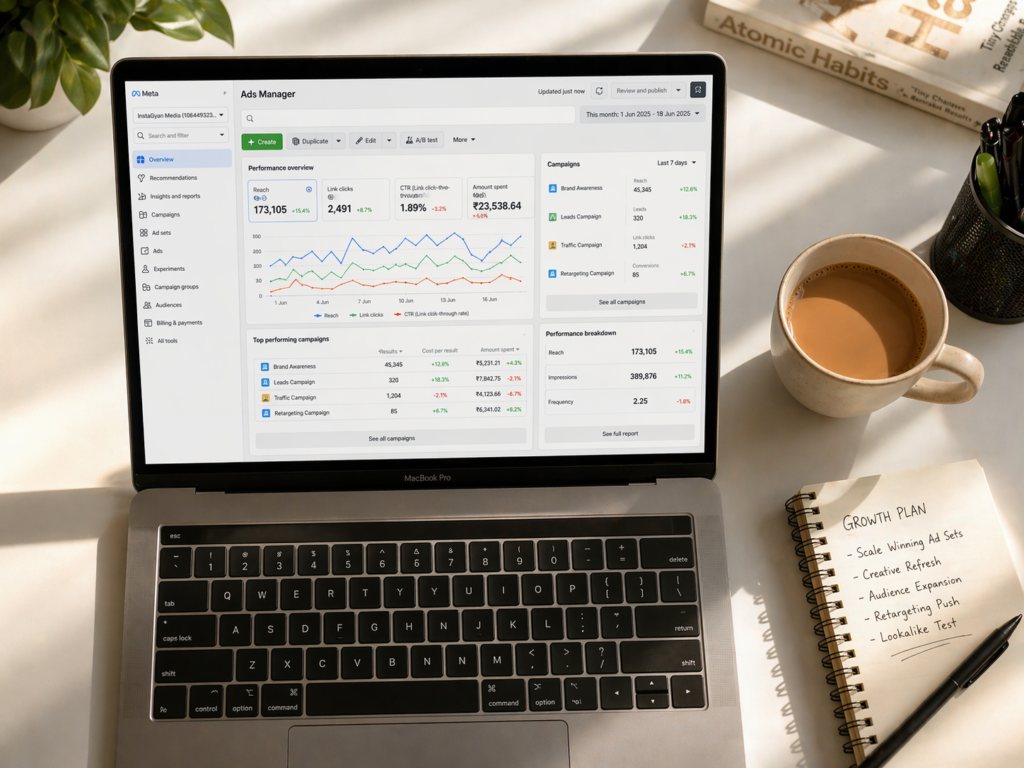
Running Facebook Ads in India has never been more competitive — or more rewarding. With over 350 million active Facebook users in India and Meta’s ad platform becoming the go-to channel for everything from real estate to local service businesses, the opportunity is massive. But here’s the hard truth: most Indian businesses are burning money on ads that don’t convert. This guide breaks down exactly what’s working in 2025 — from campaign structure to creatives — so you can stop wasting budget and start seeing real results.
Why Most Meta Ads Fail in India?
Before fixing anything, you need to understand what’s breaking. The majority of Facebook Ads failures in India come down to two root causes — and neither of them is “the algorithm.”
The Audience Mismatch Problem
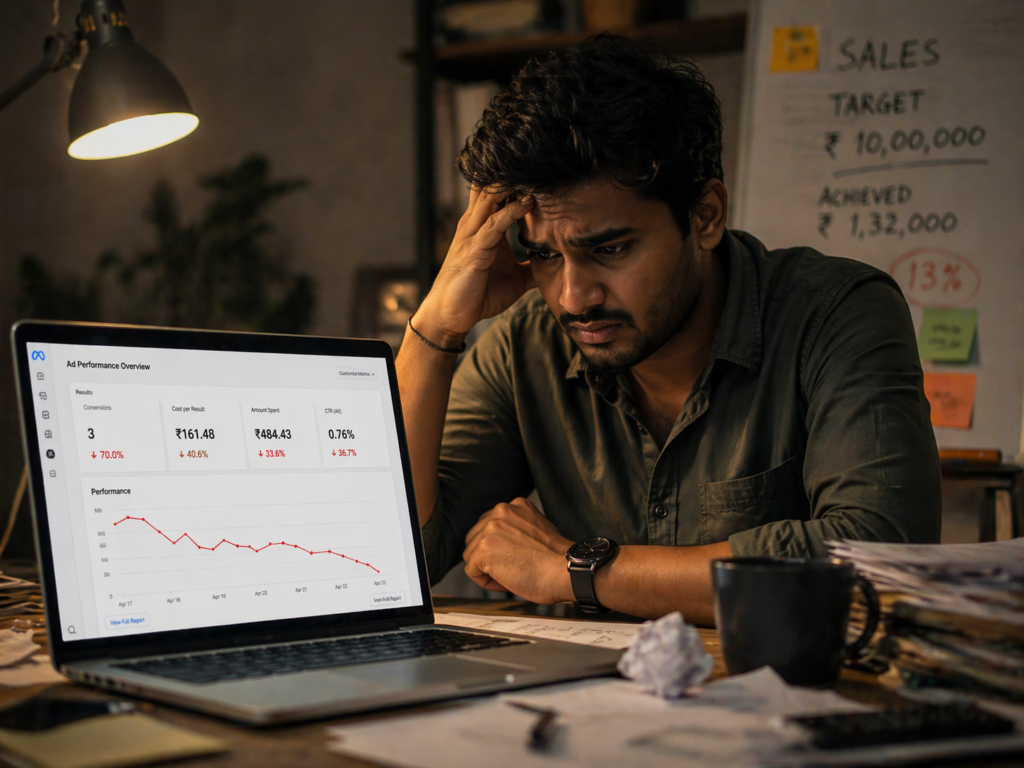
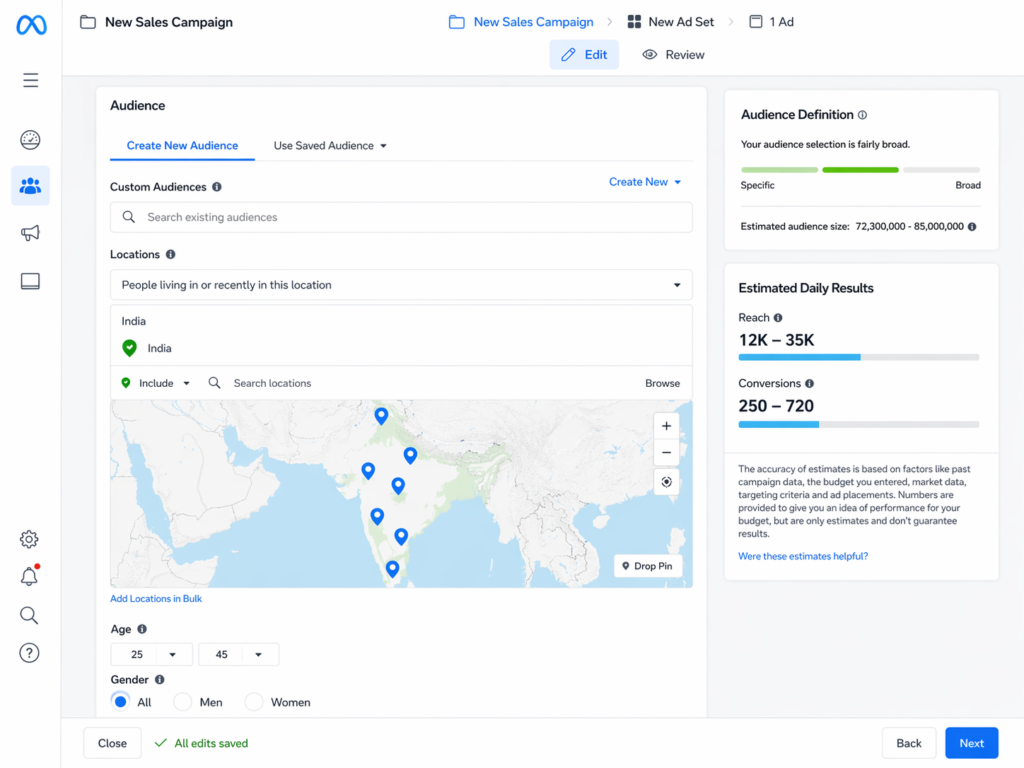
Most small business owners in India target too broadly. They select “India, Age 18–65, All Interests” and wonder why their leads are junk. Facebook’s delivery system will find the cheapest clicks, not the most relevant ones. If you’re a real estate developer in Lucknow selling ₹60 lakh flats, your audience should never include 18-year-old college students from Kerala.
The fix is precise geo-targeting (pin code level or city radius), layered with behavioural signals like “likely to move,” “recently engaged with property pages,” or income-level indicators. Your audience should feel uncomfortably small at first — that’s usually a good sign.
Wrong Objective Selection
This is the single most common mistake. A business owner wants leads, so they run a Traffic campaign — because “more website traffic means more leads,” right? Wrong. Meta’s algorithm optimises for whatever objective you select. If you choose Traffic, it finds people who love clicking links, not people who fill forms.
For lead generation, always use the Lead Generation or Conversions objective. For brand awareness in a new city or locality, use Reach or Awareness. Choosing the wrong objective is like hiring a delivery driver when you need a salesperson — same vehicle, completely different outcome.
The Exact Campaign Structure That Works
A winning Facebook Ads structure in India follows a three-layer funnel. This isn’t theory — it’s the framework behind some of the best-performing campaigns in Indian real estate, ed-tech, and local services.
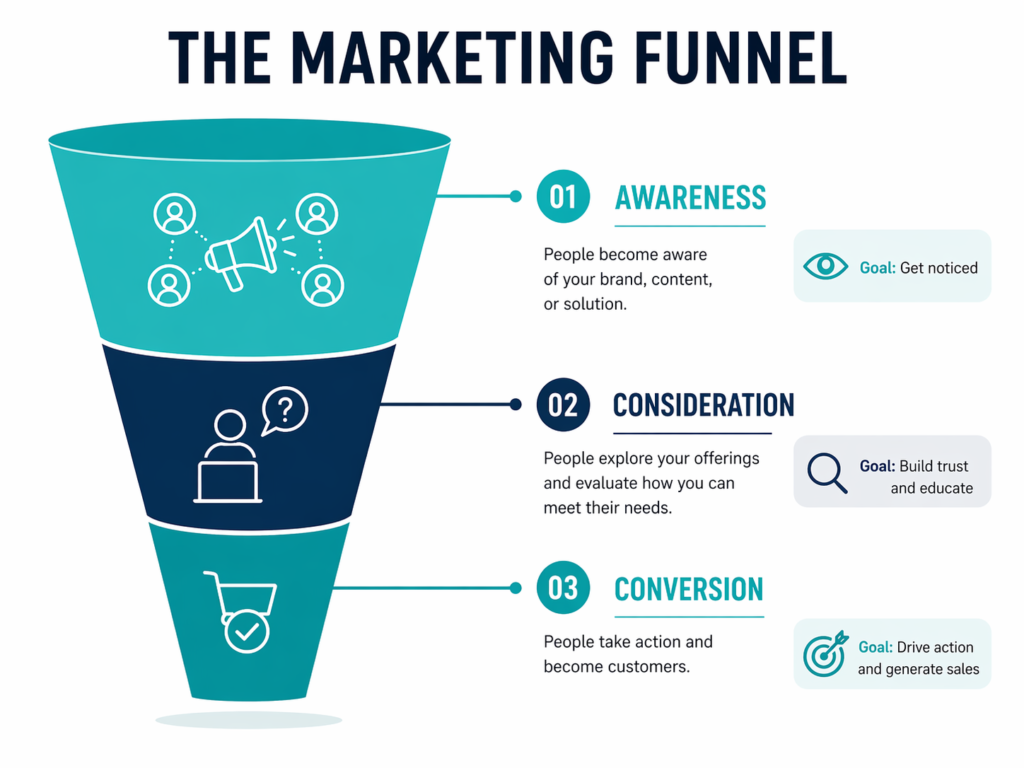
Awareness → Consideration → Conversion Funnel
- Top of Funnel (Awareness): Video ads or Reels targeting cold audiences. Goal: get seen, build familiarity. Use broad but relevant targeting here.
- Middle of Funnel (Consideration): Retarget people who watched 50%+ of your video or visited your website. Use carousel ads or testimonial-style content. Goal: build trust.
- Bottom of Funnel (Conversion): Hit warm audiences with a direct Lead Gen form or a landing page with a clear CTA — “Book a Free Consultation,” “Get a Callback,” or “Download the Brochure.”
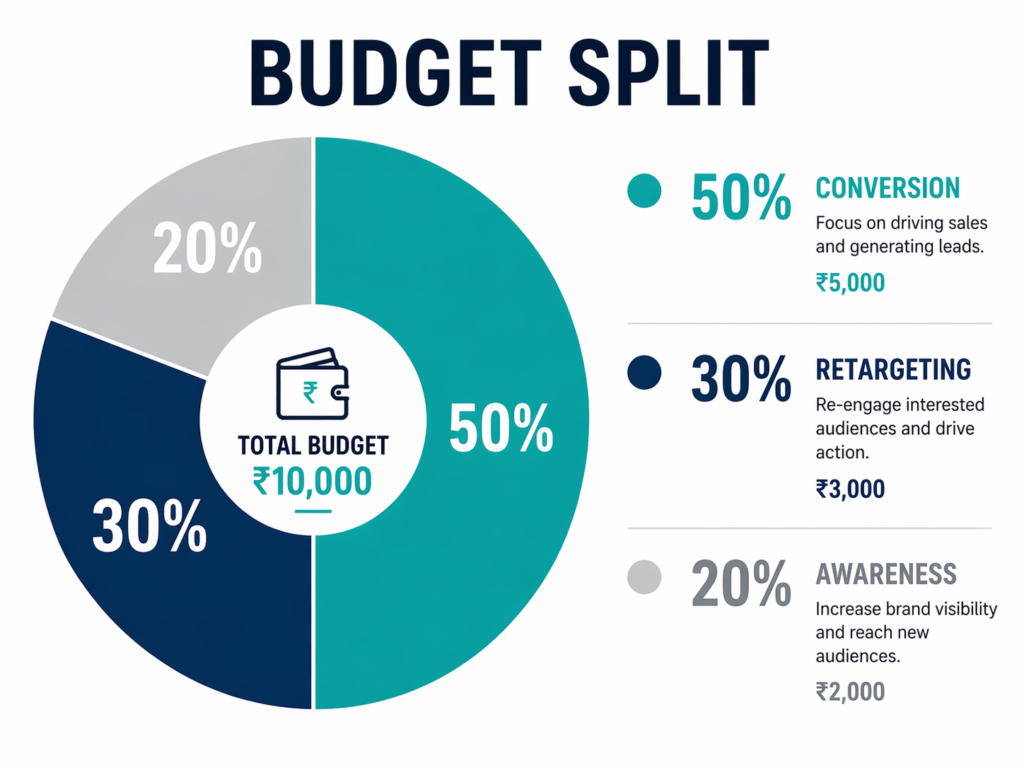
Budget Split Strategy (50/30/20 Rule)
Allocate your monthly ad budget like this:
- 50% → Bottom of funnel (conversion campaigns — this is where revenue comes from)
- 30% → Middle of funnel (retargeting — cheapest way to convert warm traffic)
- 20% → Top of funnel (awareness — feeding the funnel with fresh audiences)
Creative Formats That Stop the Scroll in India
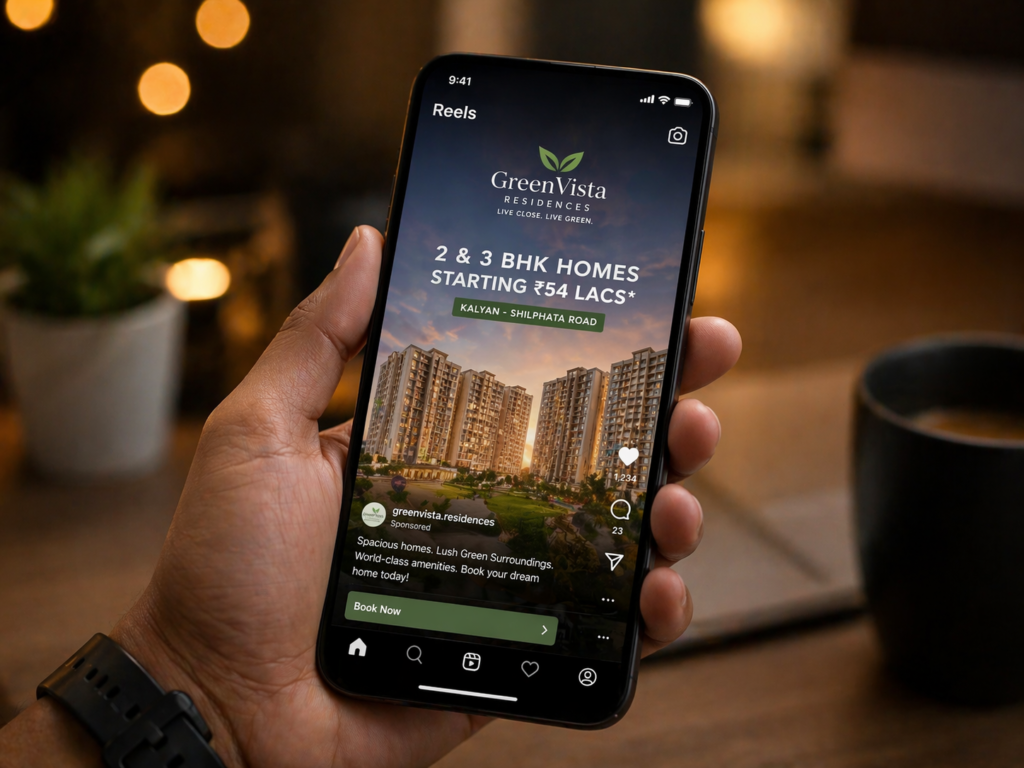
Reels vs Static vs Carousel — What Performs Best
- Reels (Short Video, 15–30 sec): Highest reach and lowest CPM in India right now. Use talking-head videos, before/after reveals, or property walkthrough clips. Hook in the first 2 seconds is non-negotiable.
- Static Single Image: Still highly effective for direct-response campaigns — especially with a bold headline and a price anchor (e.g., “2BHK Flats Starting ₹45 Lakhs | Lucknow”). Works best at the conversion stage.
- Carousel: Best for showcasing multiple features — apartment amenities, multiple service packages, or a step-by-step process. Swipe-through format increases engagement and dwell time.
In India specifically, regional language creatives (Hindi, Telugu, Marathi) consistently outperform English-only ads in Tier 2 cities. Even mixing Hindi hooks with English body copy can lift CTR by 20–30%.
How to Read Your Ads Manager Dashboard
Most people open Ads Manager, see a wall of numbers, and either panic or ignore it. Here’s what to actually focus on in 2025:


- CPM (Cost Per 1,000 Impressions): Should be ₹80–₹200 for most Indian niches. If it’s above ₹300, your audience is too narrow or competitive.
- CTR (Click-Through Rate): Aim for above 1.5% for feed ads. Below 0.8% means your creative or copy needs work.
- Frequency: If your frequency crosses 3.5 on a cold audience, rotate your creative. Ad fatigue is real and it kills ROAS silently.
- CPL (Cost Per Lead): Benchmark varies by industry — ₹80–₹250 for local services, ₹300–₹800 for real estate, ₹50–₹150 for ed-tech.
The most important thing: don’t make changes to campaigns within the first 3–5 days. Meta’s algorithm needs time to exit the “learning phase” (minimum 50 optimisation events). Early tinkering resets the learning and wastes budget.
Common Mistakes to Avoid
Even experienced marketers repeat these mistakes. Keep this list on your wall:
- Turning off ads too early — Give every ad set at least ₹500–₹1,000 before judging performance
- Using the Boost Post button — It’s the most limited, least optimised way to run ads. Always use Ads Manager
- Sending traffic to your homepage — Always use a dedicated landing page with one clear CTA
- Ignoring the mobile experience — Over 90% of Indian Facebook users are on mobile. If your landing page loads in more than 3 seconds on a 4G connection, you’re losing leads
- No retargeting pixel on your website — Install the Meta Pixel on day one, even before you run a single ad. You’ll thank yourself later
- Not testing creatives — Run at least 3 creative variations per ad set. Let data decide, not intuition
Running profitable Meta Ads in India in 2026 is equal parts science and creativity. Get the structure right, feed it with strong creatives, and let the data guide your decisions — not assumptions.
Hi, this is a comment.
To get started with moderating, editing, and deleting comments, please visit the Comments screen in the dashboard.
Commenter avatars come from Gravatar.